

Receiving a settlement offer can feel like a major step toward resolving a legal claim, but accepting the first proposal isn’t always the best decision.
The amount offered may not fully reflect your medical expenses, lost income, future costs, or the overall impact the incident has had on your life. Taking the time to evaluate the offer carefully can help you avoid costly mistakes.
Understanding how to evaluate a settlement offer involves looking beyond the dollar amount. Factors such as liability, supporting evidence, long-term financial needs, and the strength of your legal position all influence whether an offer is fair.
Skilled negotiation can also play an important role in achieving a better outcome. This guide explains the key considerations for how to evaluate settlement options with confidence and make informed decisions about your next steps.
How to Evaluate Settlement Offers Before You Accept
What Is a Settlement Offer and How Does It Work?

A settlement offer is a proposal to resolve a legal dispute without going to trial. In most cases, one party agrees to provide compensation or other agreed-upon terms, and the other party agrees to settle the claim rather than continue with litigation.
Settlement offers are common in personal injury claims, insurance disputes, employment matters, contract disagreements, and many other civil cases. They give both sides an opportunity to resolve the dispute more quickly while avoiding the uncertainty, expense, and time involved in a court proceeding.
Although many cases settle before trial, accepting a settlement offer is an important legal decision because it often brings the dispute to a permanent conclusion.
How the Settlement Process Typically Works
A settlement offer can be made at almost any stage of a case. Depending on the circumstances, it may come shortly after a claim is filed, during negotiations between attorneys, through mediation, or even while a trial is underway.
While every case is different, the process generally follows these steps:
It’s important to remember that an initial settlement offer is not always the final one. Negotiations often continue before both sides reach mutually acceptable terms.
What Is Typically Included in a Settlement Offer?
While the details vary depending on the type of case, most settlement offers address more than the amount of compensation.
A settlement agreement may include:
The amount to be paid or other agreed-upon compensation.
The timeline and method of payment.
A release of legal claims related to the dispute.
Any conditions both parties must satisfy before the agreement becomes final.
Deadlines for accepting or responding to the offer.
Confidentiality or non-disclosure provisions, when applicable.
Reviewing each term carefully is just as important as evaluating the financial amount. A higher payment may come with obligations or legal consequences that should be fully understood before making a decision.
Is a Settlement Offer Legally Binding?
A settlement offer itself is generally a proposal rather than a binding agreement. In many cases, it becomes legally enforceable only after both parties agree to its terms and complete the required documentation.
Because accepting a settlement often means giving up the right to pursue additional claims arising from the same dispute, it’s important to understand exactly what rights you’re agreeing to waive before signing any final agreement.
Whether you’re dealing with a personal injury claim, a contract dispute, or another civil matter, taking time to carefully evaluate settlement offers can help you make an informed decision that reflects both your immediate needs and your long-term interests.
How Can You Determine if a Settlement Offer Is Fair?
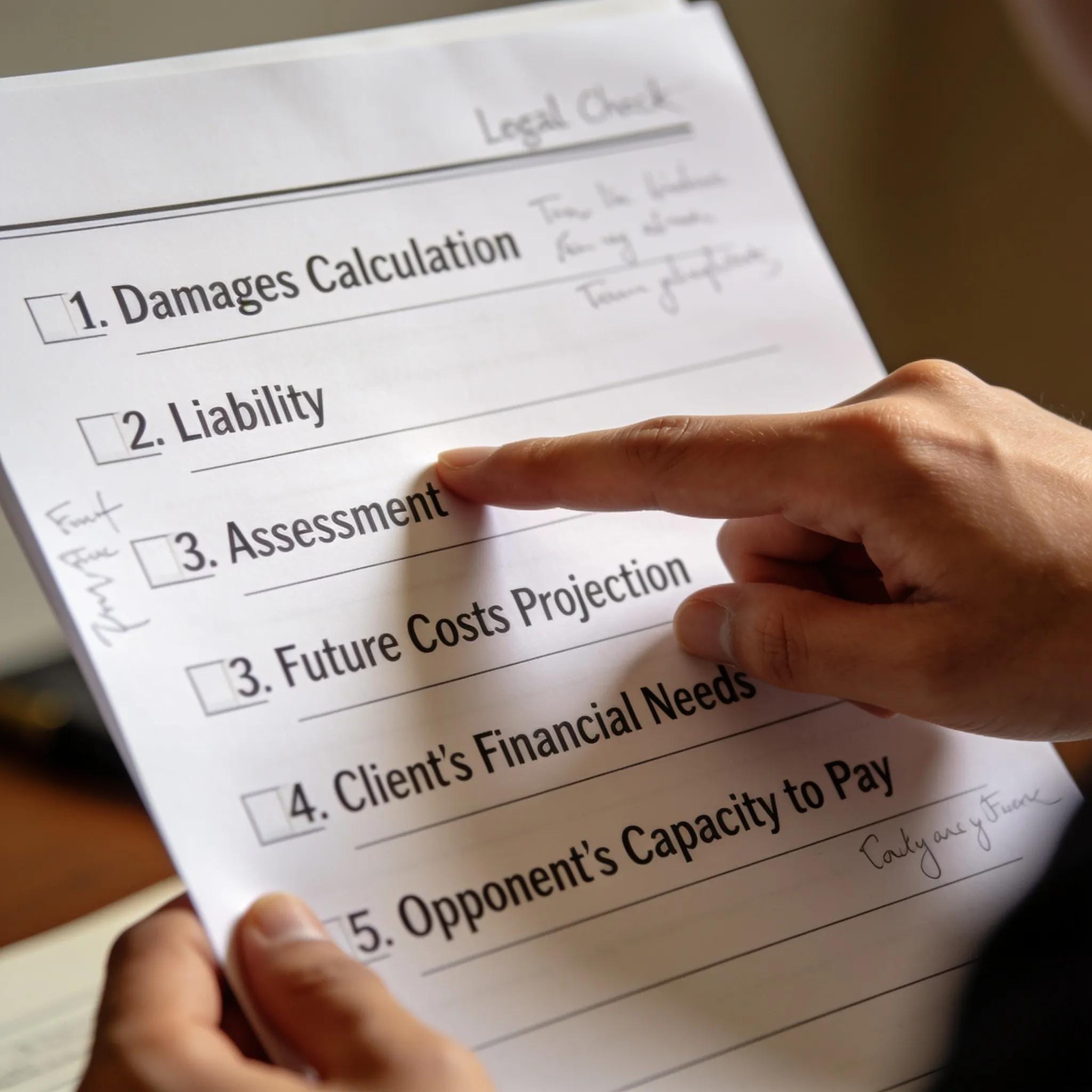
A settlement offer is not fair simply because it covers your immediate bills or seems large at first glance. Its value depends on what you have already lost, what costs may continue, the strength of your claim, and the rights you would give up by accepting it.
A proper evaluation looks beyond the headline number. Before responding, compare the offer with the full financial and personal impact of the dispute, then review every condition attached to the proposed agreement.
Calculate the Full Value of Your Documented Losses
Start with the losses that can be supported by bills, records, receipts, and employment documents. Depending on the type of claim, these may include:
Do not compare the settlement offer only with bills that have already arrived. If treatment is ongoing or the long-term effects are not yet clear, accepting too early could leave you responsible for expenses that appear later.
Future costs should be based on reliable evidence, such as medical recommendations, treatment plans, employment records, or professional estimates, rather than guesswork.
Consider Losses That Are Harder to Measure
Not every effect of an injury or dispute appears on an invoice. Depending on the claim and applicable law, the overall value may also reflect pain, emotional distress, disruption to daily life, loss of independence, or an inability to participate in normal activities.
These losses are more subjective, which is why they require careful documentation and case-specific analysis. The seriousness and duration of the harm matter. A temporary inconvenience is evaluated differently from a lasting injury that affects work, mobility, relationships, or everyday responsibilities.
Compare the Offer With the Risks of Continuing
A fair offer does not always equal the highest amount you could possibly recover. Settlement decisions also involve timing, uncertainty, and the cost of continuing the dispute.
Consider questions such as:
How strong is the evidence supporting the claim?
Is responsibility disputed?
Could any legal rule reduce the potential recovery?
How long could additional negotiation or litigation take?
What expenses may be deducted from the final recovery?
Is the other party or insurer likely to pay a judgment?
This does not mean accepting a low offer simply to avoid inconvenience. It means comparing the certainty of the current proposal with the realistic benefits and risks of continuing.
Review the Net Amount You Would Actually Receive
The gross amount listed in a settlement offer may not be the amount that reaches you.
Before deciding, identify possible deductions, including attorney fees, case expenses, unpaid medical balances, insurance reimbursement claims, taxes when applicable, and other obligations. The net recovery is often more useful for decision-making than the offer amount alone.
Ask for a clear estimate of how the funds would be distributed so that you understand what the settlement would provide after outstanding costs are addressed.
Examine Every Term, Not Just the Payment
A settlement agreement commonly includes a release of claims. Once signed, that release may prevent you from seeking further compensation connected to the same dispute, even if additional losses become apparent later.
Review provisions involving:
The scope of the legal release.
Payment timing and structure.
Confidentiality requirements.
Responsibility for outstanding bills or liens.
Dismissal of the case.
Any promises or restrictions that continue after payment.
Unclear or overly broad language can affect the practical value of an otherwise reasonable offer.
Use a Settlement Offer Review Checklist
Before accepting, rejecting, or countering an offer, confirm that you can answer the following questions:
Does the amount account for past and expected future losses?
Is each category of damage supported by evidence?
What deductions will reduce the final payment?
Which legal rights will be released?
Are any important costs or consequences missing?
How does the offer compare with the risks of continuing?
Is there a deadline for responding?
Have the terms been reviewed by a qualified attorney?
A settlement offer should be evaluated as a complete agreement, not simply as a payment. Looking at the evidence, future needs, net recovery, and legal terms together provides a far more reliable picture of whether the proposal is fair.
What Questions Should You Ask Before Accepting a Settlement Offer?

Before accepting a settlement offer, you need more than a clear dollar amount. You should understand what the payment covers, how much you will actually receive, which rights you are giving up, and what will happen after the agreement is signed.
Acceptance often ends the dispute and requires you to release some or all related claims. That can make it difficult or impossible to seek additional compensation later, even if new expenses or consequences arise.
Asking the right questions before responding helps you evaluate settlement agreements rather than focusing only on the proposed payment.
What Losses Does the Offer Cover?
Ask for a clear explanation of how the settlement amount was calculated. The proposal should be compared with every category of loss connected to the claim, not just the most visible expenses.
Depending on the dispute, ask whether the offer accounts for:
Medical bills and rehabilitation costs.
Income already lost because of the incident.
Reduced future earnings or work limitations.
Property damage and replacement costs.
Ongoing treatment or anticipated future expenses.
Pain, emotional distress, or disruption to daily life when legally applicable.
If the offer does not explain which losses it covers, you may have difficulty determining whether important costs were overlooked.
How Much Will I Actually Receive?
The amount shown in the settlement offer may be different from the amount you ultimately receive.
Ask for an estimate of the net payment after any applicable deductions. These could include attorney fees, legal expenses, medical balances, insurance reimbursement claims, liens, taxes, or other obligations.
Questions to clarify include:
Which amounts will be deducted before payment?
Who is responsible for resolving outstanding medical bills or liens?
Could additional deductions arise later?
Will payment be issued as one lump sum or through installments?
When should the funds be available?
Understanding the net recovery gives you a more realistic basis for evaluating the proposal.
Which Claims and Rights Will I Release?
A settlement agreement will often include release language identifying the claims you agree not to pursue. Read this section carefully and ask whether the release applies only to the current dispute or extends to other known or unknown claims.
Clarify:
Which people, businesses, insurers, or organizations will be released?
Does the agreement cover only existing losses?
Could it prevent claims based on future complications?
Are any unrelated claims included?
Does the release affect anyone else’s rights?
The wording of the release can have lasting consequences. Do not assume it is standard or harmless simply because it appears in a routine form.
Are Future Costs Still Uncertain?
A settlement may be difficult to evaluate when medical treatment, repairs, employment effects, or other losses are still developing.
Before accepting, ask whether you have enough information to estimate future needs. For an injury-related claim, that may mean knowing whether additional treatment, therapy, medication, medical equipment, or time away from work is likely.
Once the settlement is final, you may be responsible for costs that arise afterward. Waiting for a clearer prognosis or obtaining reliable estimates may be appropriate when future losses remain uncertain.
Are There Conditions Beyond the Payment?
Settlement agreements may contain obligations that continue after the money is paid.
Ask whether the proposed terms include:
A condition that appears minor may affect your privacy, future communications, or ability to enforce the settlement.
What Happens if I Reject or Counter the Offer?
Rejecting a settlement offer does not guarantee that a better proposal will follow. It may lead to further negotiation, mediation, litigation, or trial, depending on the case.
Before deciding, ask:
Can I make a counteroffer?
How strong is the evidence supporting my position?
What additional time and expense could the case require?
Could the potential recovery be lower than the current offer?
Is there a deadline for responding?
Can the offer be withdrawn before that deadline?
The goal is not to eliminate every risk. It is to compare the certainty of the current offer with the realistic advantages and disadvantages of continuing.
Has the Complete Agreement Been Reviewed?
Do not rely solely on a summary, email, or verbal explanation. Ask to review the complete written agreement before accepting it.
A qualified attorney can explain unclear provisions, identify broad release language, calculate the likely net recovery, and assess how the settlement offer compares with the strengths and risks of the case.
While the final decision belongs to you, it should be based on the full agreement and its long-term effects, not pressure to reach a quick resolution.
How to Negotiate a Settlement Offer Effectively

Receiving a settlement offer doesn’t mean negotiations are over. In many cases, the first proposal serves as the starting point for further discussions rather than the final agreement.
Successful negotiations rely on preparation, documentation, and a clear understanding of your claim. Rather than responding emotionally or accepting the first figure presented, take time to evaluate settlement offers, identify any gaps, and develop a reasoned response supported by evidence.
Build Your Negotiation Around Evidence
The strongest negotiating position is based on facts, not opinions. Before responding to a settlement offer, organize documentation that supports your position, such as:
Medical records and treatment plans.
Bills, receipts, and other financial records.
Proof of lost income or reduced earning capacity.
Repair estimates or property damage documentation.
Photographs, witness statements, or other relevant evidence.
Professional opinions regarding future medical care or ongoing losses, when applicable.
The more clearly your losses are documented, the easier it becomes to explain why a higher settlement may be justified.
Know Your Target Before Negotiations Begin
Entering negotiations without a clear objective can make it difficult to evaluate counteroffers.
Before responding, determine:
Having realistic expectations allows you to negotiate with greater confidence while remaining open to reasonable compromise.
Respond With a Thoughtful Counteroffer
If you believe the settlement offer does not fairly reflect your losses, consider explaining why rather than simply rejecting it.
An effective counteroffer typically:
Identifies specific areas where the offer falls short.
References supporting documentation.
Explains additional damages or future expenses that should be considered.
Proposes a revised amount or modified terms.
Supporting your position with evidence often carries more weight than making general statements that the offer is “too low.”
Stay Focused on the Long-Term Outcome
Settlement negotiations can become stressful, particularly when financial pressures or medical expenses are involved. While it’s understandable to want a quick resolution, accepting an offer solely because you feel pressured may not serve your long-term interests.
Likewise, rejecting a reasonable offer simply to prolong negotiations can also create unnecessary expense, delay, and uncertainty.
Approaching each stage of the negotiation with patience and realistic expectations often leads to more productive discussions.
Remember That More Than Money Can Be Negotiated
Although compensation is usually the primary focus, other parts of the agreement may also be negotiable depending on the circumstances.
Examples include:
Payment timing.
Structured versus lump-sum payments.
Confidentiality provisions.
Release language.
Responsibility for outstanding liens or medical bills.
Other settlement conditions that affect your legal rights.
Reviewing the entire agreement instead of concentrating only on the dollar amount can lead to a more favorable overall outcome.
Know When Legal Representation Can Make a Difference
Some settlement negotiations are straightforward, while others involve significant legal or financial complexity.
Professional legal guidance may be particularly valuable if:
The settlement offer involves substantial compensation.
Liability is disputed.
Future medical treatment or long-term losses remain uncertain.
The agreement contains complicated legal language.
Multiple insurance companies or parties are involved.
You’re unsure whether the offer reflects the full value of your claim.
An attorney can evaluate the strengths of your case, negotiate on your behalf, explain the legal consequences of accepting a settlement offer, and help determine whether a counteroffer or continued negotiations may be appropriate.
The goal of any negotiation is not simply to obtain a higher number. It’s to reach a settlement offer that fairly reflects the evidence, addresses your current and future losses, and resolves the dispute on terms you fully understand before signing the agreement.
When Should You Accept, Negotiate, or Reject a Settlement Offer?

After reviewing the evidence, evaluating your losses, and understanding the terms of the agreement, the final step is deciding how to respond to the settlement offer.
There is no universal answer. The right decision depends on the strength of your claim, the certainty of your future losses, the risks of continued litigation, and whether the proposed agreement reflects the value of your case.
Rather than asking whether the offer feels reasonable, ask whether it fairly resolves the dispute based on the information available today.
Situations Where Accepting the Offer May Make Sense
Accepting a settlement offer may be appropriate when the proposal adequately compensates you for your documented losses and the terms of the agreement are clear.
You may decide acceptance is the best option if:
The offer reflects your current and reasonably anticipated future damages.
Medical treatment is complete or future costs can be estimated with confidence.
Liability is uncertain, making the outcome of litigation difficult to predict.
Continuing the dispute would involve significant additional time, expense, or stress.
You understand and accept every provision of the settlement agreement.
Accepting a settlement provides certainty. Instead of facing months or years of additional legal proceedings, both parties agree to resolve the dispute and move forward.
When Negotiating Is the Better Option
Many first offers leave room for discussion.
If you believe the settlement offer undervalues your claim but negotiations remain productive, making a counteroffer may be more appropriate than immediately accepting or rejecting it.
Negotiation may be worthwhile when:
A well-supported counteroffer demonstrates why changes are justified instead of simply requesting more compensation.
When Rejecting a Settlement Offer May Be Appropriate
Rejecting a settlement offer is sometimes the best decision, particularly when the proposal fails to reasonably address the facts of the case.
Reasons to reject an offer may include:
It does not cover documented financial losses.
Important future damages have not yet been evaluated.
The agreement contains overly broad release language or other unfavorable conditions.
New evidence could significantly affect the value of the claim.
The other party refuses to negotiate despite clear supporting documentation.
Rejecting an offer does not automatically mean the case will proceed directly to trial. In many situations, negotiations continue, additional evidence is exchanged, mediation takes place, or a revised settlement proposal is presented.
Balance Risk Against Certainty
Every settlement decision involves weighing certainty against possibility.
Continuing a case may result in a larger recovery, but it also carries the possibility of receiving less than expected or recovering nothing at all. It can also require additional legal costs, more time, and the emotional strain of ongoing litigation.
Accepting an offer provides certainty but closes the door on pursuing further compensation for the claims covered by the agreement.
Neither choice is inherently right or wrong. The appropriate decision depends on the specific facts, available evidence, and your willingness to accept the risks associated with continuing the dispute.
A Decision Checklist Before Responding
Before accepting, negotiating, or rejecting a settlement offer, confirm that you can answer “yes” to these questions:
Do I understand every term of the agreement?
Have all current and future losses been considered?
Do I know how much I will receive after deductions?
Am I comfortable with the legal rights I will release?
Have I compared the offer with the risks of continued litigation?
Have I reviewed the agreement with my attorney if legal representation is available?
A settlement offer should be evaluated as a complete legal and financial decision, not simply as a payment amount. Taking the time to consider both the immediate benefits and the long-term consequences will help you choose the path that best protects your interests.
Conclusion
Evaluating a settlement offer requires more than comparing numbers. It means understanding the full extent of your injuries, future medical expenses, lost income, and the long-term impact the accident may have on your life.
Taking the time to review every aspect of an offer with an experienced attorney can help you avoid accepting less than you deserve and give you greater confidence throughout the negotiation process.
For knowledgeable legal guidance and dedicated personal injury representation, choose Hummel Trial Law. If you’re ready to review a settlement offer or discuss your legal options, call 404-689-0104 to speak with the team at Hummel Trial Law or schedule your free consultation today.